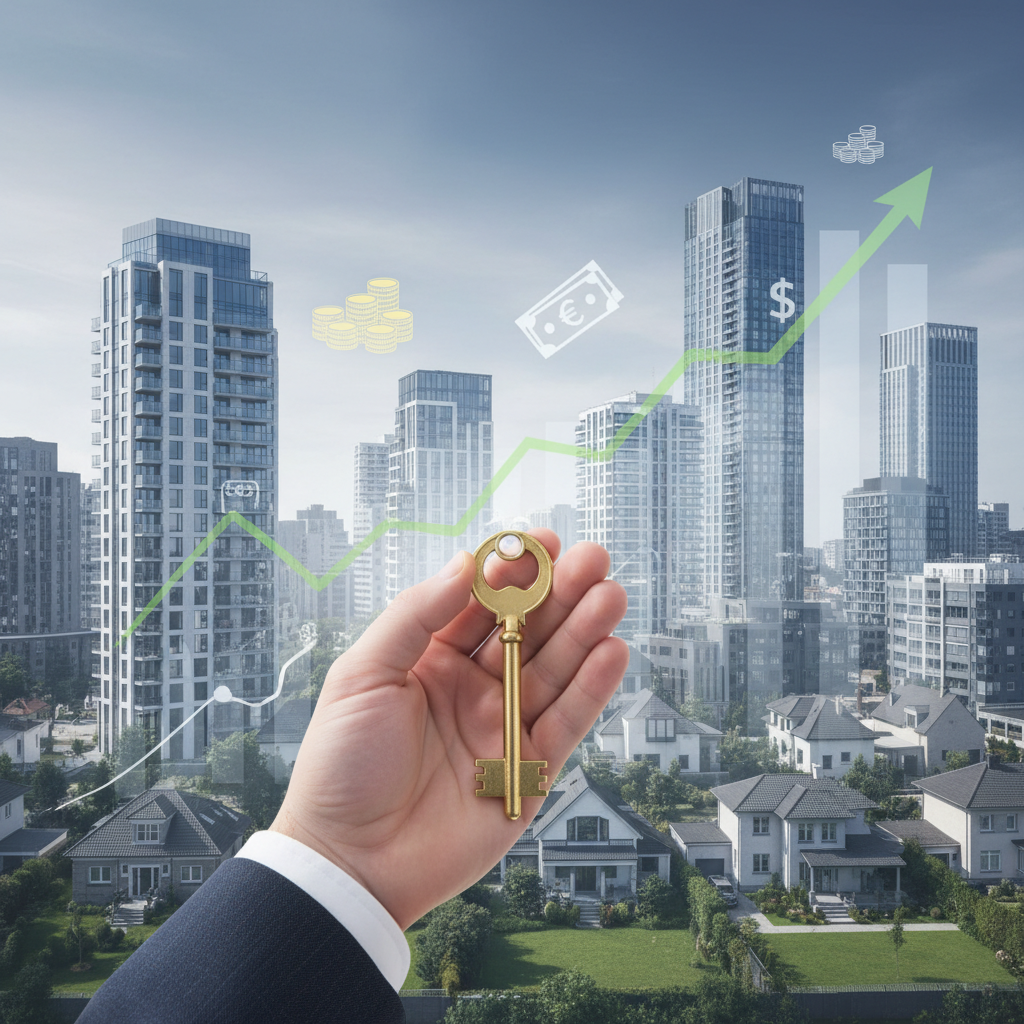
Operation of the real estate market
The real estate market is based on the interaction between the offer of properties and the demand from buyers or tenants. This dynamic defines changes in prices and availability.
This system is very sensitive to economic, social and political factors that affect supply and demand, creating a fluctuating balance in the real estate market.
Interaction between supply and demand
Supply encompasses properties available for sale or rent, while demand represents those interested in acquiring or renting them. Their relationship determines the behavior of the market.
When demand exceeds supply, prices increase; If supply is greater, prices tend to decrease, reflecting a changing and constant balance between both variables.
These movements not only affect prices, but also the speed of transactions and investment in new construction or real estate developments.
Factors that influence price balance
Price equilibrium is influenced by variables such as general economy, interest rates and government housing policies, which modify the capacity and interest of buyers.
Furthermore, the location and specific characteristics of each property, together with demographic demand, directly impact market value and supply.
The availability of credit and social conditions also play a fundamental role, determining the accessibility of housing and the frequency of real estate operations.
Main variables that affect the market
The location and the specific characteristics of the properties decisively influence their value and attractiveness in the real estate market. These variables determine demand.
Along with this, the economic conditions and policies, such as interest rates and regulations, affect purchasing power and sector dynamics.
Likewise, demographic and social factors, and technological innovation play a key role in the evolution and sustainability of the market.
Location and characteristics of the property
The location determines accessibility to services, infrastructure and employment areas, fundamental aspects for the value of the property. Central or well-connected areas tend to be more in demand.
Physical characteristics such as size, age, state of conservation and design also impact the valuation. Modern, well-maintained properties attract more buyers.
The social and environmental environment of the property, including security and green spaces, adds value and conditions the perception of quality of life.
Economic and political conditions
Economic stability, income level and interest rates influence the financial capacity of buyers, affecting demand and property prices.
Government policies, such as subsidies, planning regulations and credit facilities, can incentivize or limit real estate activity in a specific market.
Changes in these conditions often generate significant fluctuations in the supply and demand of housing and commercial spaces.
Demographic and social factors
Population growth and changes in family structure modify the demand for different types of homes and real estate spaces.
Social trends, such as urbanization or preferences for sustainable housing, influence the development and characteristics of new real estate projects.
Mobility and migration also alter demand, generating new sources of interest in different urban or rural areas.
Technological innovation and sustainability
The integration of smart technologies in buildings, such as home automation and energy efficiency, increases the value and attractiveness of modern properties.
Sustainable real estate projects respond to a growing environmental awareness, generating demand for properties with less ecological impact.
These innovations create new opportunities and challenges in the market, affecting investments and preferences of buyers and tenants.
Economic impact of the real estate market
The real estate market is a key driver for the economy, due to its ability to generate employment and stimulate various productive sectors.
In addition, investing in real estate makes it easier capital accumulation, contributing to the financial stability of households and investors.
Generation of employment and economic activity
The real estate sector drives employment in construction, maintenance, brokerage services and financing, benefiting multiple related industries.
Furthermore, its activity boosts the consumption of materials, technology and services, creating a multiplier effect on the local and national economy.
The constant demand for housing and commercial spaces maintains diversified and sustainable economic activity over time.
Capital accumulation and financial stability
Real estate represents durable assets that allow households and investors to accumulate wealth and diversify their wealth.
This accumulation contributes to the financial stability individual and collective, protecting value against inflation or economic crises.
In addition, the real estate market influences the financial system by facilitating credits and investments, strengthening liquidity and economic confidence.
Relationship between real estate market and economic dynamics
The real estate market acts as a reflex of economic dynamics, showing clear signals about the financial health of a country or region.
Its behavior influences investment, consumption and social well-being, being a key element to understand the economy in general.
Indicator of economic health
The real estate market reflects the economic stability through property demand and prices. High levels indicate confidence and growth.
Falls in sales or prices usually anticipate recessions or financial problems that limit access to credit and affect the economy in general.
This sector also signals changes in economic policies, inflation and interest rates, serving as a barometer for investors and governments.
Effects on investment, consumption and social well-being
Real estate investment mobilizes capital, creates employment and generates demand in related sectors such as construction and financial services.
Furthermore, access to adequate housing improves the quality of life, promoting social stability and increasing consumption in the local economy.
Fluctuations in the market impact family wealth and spending capacity, conditioning well-being and social cohesion.