Definition and characteristics of the informal economy
The informal economy it covers economic activities not regulated or registered by the State, which places them outside fiscal and labor control. These activities usually do not have social protection.
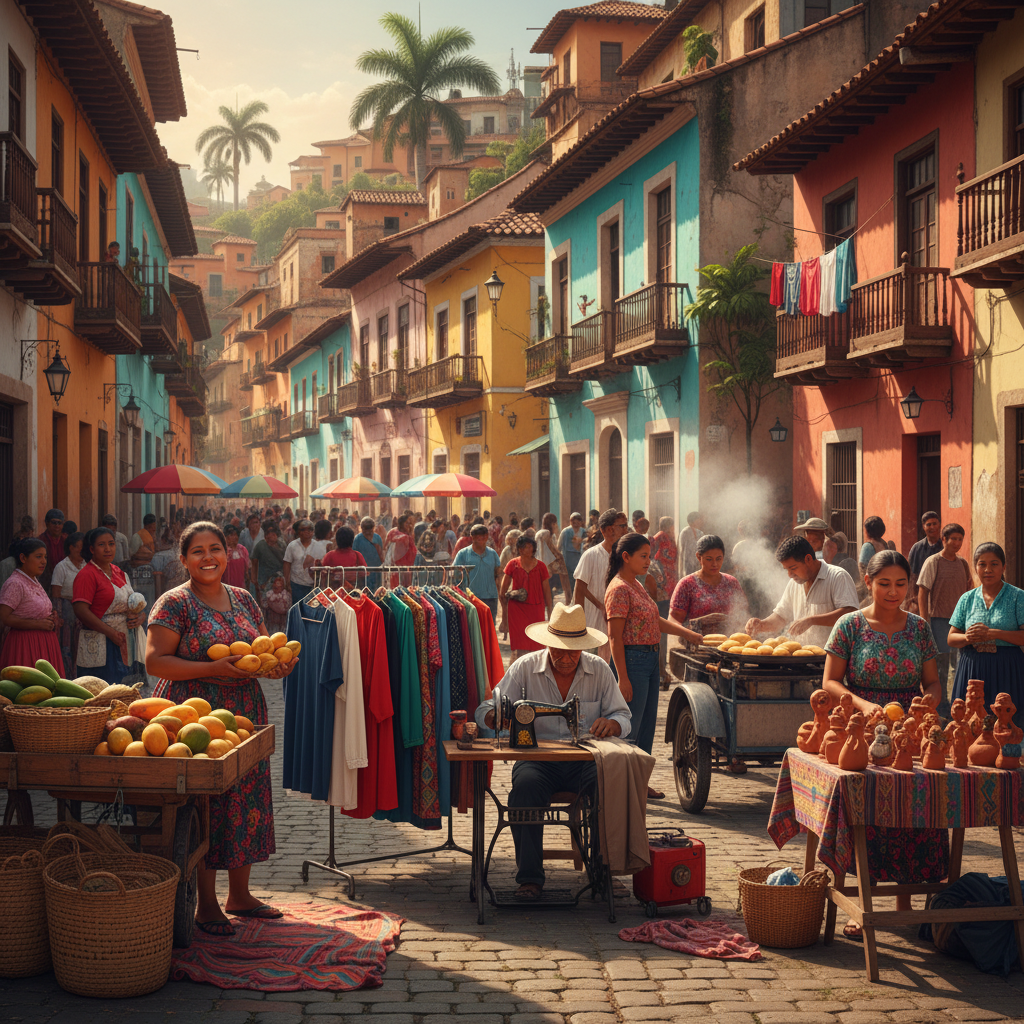
This sector includes jobs such as undeclared domestic employment, street vending without a license, craft workshops and temporary or subsistence jobs, which often seek to survive in adverse conditions.
The informal economy is a common phenomenon in regions with pressured labor markets, where many people turn to these activities due to a lack of formal opportunities.
Concept and main activities
The informal economy includes a set of jobs and activities not legally registered, which do not enjoy social protection or job security. Its nature is diverse and dynamic.
Among the main activities are undeclared domestic work, unauthorized street vending and unregistered craft workshops, along with temporary or subsistence jobs.
These tasks are carried out by people who, for the most part, seek to earn an honest living despite the lack of guarantees or formal rights.
Absence of state regulation and protection
An essential characteristic of the informal economy is the absence of state regulation, which implies that workers do not have access to social security or labor benefits.
This lack of protection leaves informal employees vulnerable to precarious working conditions and without support for risks or illnesses, in addition to not contributing to the tax system.
The lack of state control also generates tax evasion and limits the State's ability to invest in infrastructure and social programs, affecting development.
Impact of the informal economy in Latin America
The informal economy in Latin America represents close to 50% of the workforce, showing its great relevance in the region. This situation limits economic and social development.
This high informality generates fiscal challenges, since it reduces the public resources available to invest in infrastructure and social programs essential for well-being.
Furthermore, working conditions in this sector tend to be precarious, with low productivity, which negatively affects sustained economic growth in Latin American countries.
Prevalence in the workforce
In Latin America, almost half of workers are part of the informal economy, a much higher percentage than in other regions. This reflects the lack of formal employment and stable opportunities.
The extension of informality in the workforce implies that millions of people work without social security or labor rights, increasing the vulnerability of broad social sectors.
This high prevalence also shows the inability of formal labor markets to absorb the entire active population, leading to the informal sector being an alternative to survive.
Fiscal and social consequences
The informal economy represents a large fiscal loss for States, given that workers and employers do not contribute to taxes or social security systems.
This situation limits the ability of governments to finance public services, social programs and health and pension expenses, which directly affects the entire society.
Socially, informality fosters inequality, as those who work in this sector lack protection and are exposed to unsafe, low-income working conditions.
Productivity and working conditions
The informal sector is often characterized by lower productivity compared to the formal sector, which limits the capacity for economic growth and improved living standards.
Working conditions in this area are usually precarious, without formal contracts or benefits, which negatively impacts the quality of life of workers.
Lack of legal protection and lack of access to training reduces opportunities to increase skills and improve productivity in informal activities.
Factors that originate the informal economy
The informal economy arises from multiple causes, including structural factors and labor market conditions that limit the creation of formal jobs. These aspects influence the decision of many to enter this sector.
Furthermore, the existence of regulatory barriers and high costs to formalize also encourages permanence in informality. The combination of these elements makes the transition towards business and labor formalization difficult.
Structural aspects and labor market
The insufficiency of formal jobs in Latin America generates constant pressure on the labor market, forcing many people to look for options in the informal economy to ensure income.
In many countries, high unemployment and low creation of stable jobs intensify this dynamic, making it difficult for workers to find formal alternatives with social security and labor rights.
Likewise, limited skills and the demand for temporary or subsistence jobs increase dependence on the informal sector as a means of subsistence in vulnerable contexts.
Regulation, bureaucracy and formalization costs
Complex regulation and excessive bureaucracy represent a major obstacle for small businesses and entrepreneurs who want to formalize their economic activities.
The financial and administrative costs and the time required to complete the procedures may be too high, discouraging formalization and favoring permanence in the informal economy.
This scenario generates a vicious circle, where informality is maintained due to the difficulty of accessing the benefits and services offered by formality, limiting the sustainable growth of the sector.
Reality and challenges of the informal sector
The informal economy, despite its legal invisibility, contributes significantly to local economies, showing the work honesty of many workers in adverse conditions.
This sector reflects the entrepreneurial capacity and resilience of those seeking income through unregulated activities, although they face multiple obstacles to their full development.
Financial contribution and work honesty
Although not formalized, informal workers contribute to the economy by generating employment and essential services in local communities and markets.
Many of them carry out their work ethically, seeking legitimate income to improve their quality of life, despite lacking protection and social benefits.
Its daily efforts support sectors such as retail trade, artisanal production and personal services, key pieces in regional economic dynamics.
Challenges for formalization and public policies
The main challenge is to design policies that reduce bureaucracy and cost barriers so that workers can integrate into the formal sector without losing their livelihoods.
It is necessary to implement inclusive strategies that offer incentives, training and access to services to strengthen the transition towards labor and business formality.
Furthermore, the State must ensure social protection and improve supervision to balance tax justice with the promotion of sustainable development.