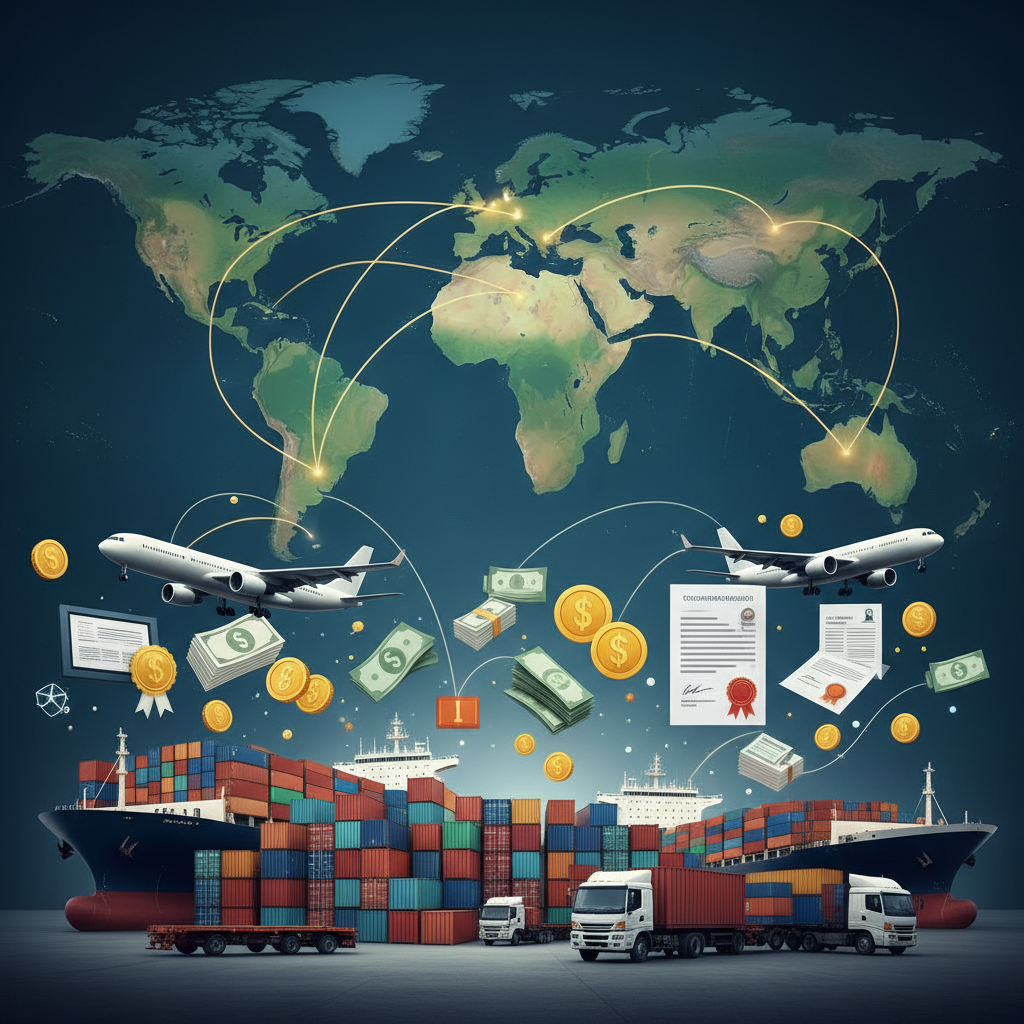
Fundamentals of international trade
The international trade it allows countries to specialize in the production of goods where they have an advantage, optimizing resources and increasing global efficiency. This exchange consists of importing and exporting products that are not produced locally with the same efficiency.
Thanks to this specialization, productivity is improved, the cost of goods and services is reduced, and benefits are generated for both producers and consumers. This promotes more integrated and dynamic economic development on a global level.
Comparative advantage and productive specialization
The comparative advantage it is the central principle that explains why countries benefit by specializing in goods where they are most efficient. This promotes focused and profitable production, reducing waste.
Specializing in productive sectors strengthens national economies and facilitates growth by allowing each country to export what it produces best and import what is least efficient to manufacture locally.
This specialization process promotes international cooperation, encourages economic integration and contributes to a more optimal distribution of global resources, generating long-term economic benefits.
Optimization of resources and cost reduction
The international trade optimizes the use of limited resources, assigning them to productive activities where their performance is maximum, which reduces costs and improves product competitiveness.
By expanding markets, companies achieve economies of scale, reducing fixed expenses and achieving more affordable prices for consumers in different countries.
Furthermore, this optimization contributes to economic diversification and reduces dependence on internal markets, strengthening resilience in the face of financial or commercial crises.
Economic effects of international trade
The international trade it significantly boosts the economy by opening new markets and opportunities for companies, generating a direct impact on employment and business development.
In addition, it encourages innovation and improves product quality, which increases the competitiveness of companies globally and contributes to sustainable economic growth.
Job generation and business expansion
By accessing international markets, companies can expand, increasing their productive capacity and requiring a larger workforce, which translates into the creation of new jobs.
This expansion also generates the opening of new industries and economic sectors, diversifying job opportunities and strengthening the national business fabric.
Furthermore, global demand encourages the professionalization and training of personnel, improving the quality of employment and working conditions in different sectors.
Innovation, quality and competitiveness
Global competition encourages companies to constantly innovate to differentiate themselves and offer better and more efficient products, driving technological advances and optimized processes.
This dynamic favors the continuous improvement of quality, providing consumers with more varied and accessible products, raising their level of satisfaction.
Likewise, international competitiveness encourages companies to adopt more sustainable and efficient practices, promoting responsible and sustainable economic development.
Impact on economic growth and balance of payments
International trade contributes to economic growth by increasing the Gross Domestic Product (GDP) by expanding exports and expanding markets for domestic products.
It also has a positive effect on the balance of payments, generating income from external sales that balance or exceed imports, strengthening the country's financial stability.
Furthermore, a favorable trade balance makes it possible to finance investments and improve infrastructure, creating a virtuous circle that enhances development and global economic integration.
Infrastructure development and technology transfer
The infrastructure development it is key to improving the efficiency of international trade, facilitating the flow of goods and services between countries.
Investments in ports, roads and means of transportation enhance connectivity and reduce logistics times and costs, benefiting the economies involved.
Improvement of infrastructure to facilitate exchange
Improving infrastructure reduces physical barriers to trade and optimizes the supply chain, allowing faster and safer exchange between countries.
Modern ports, efficient airports and reliable transportation systems ensure that products reach international markets in better conditions and in less time.
This advanced infrastructure also attracts foreign investment, creates jobs and strengthens regional integration, driving sustainable economic development.
Technology transfer and reduction of productive gaps
Technology transfer through international trade allows developing economies to access innovations and advanced knowledge.
This improves their production processes and reduces technological gaps, placing them in better conditions to compete globally and grow economically.
Furthermore, the adoption of new technologies drives industrial diversification and increases the quality of exported products, strengthening the country's international position.
Social and political implications of international exchange
The international trade it has important social effects by democratizing access to goods and services, allowing more people to enjoy products that were previously inaccessible.
In addition, it strengthens political relations between countries, creating a framework for cooperation and agreements that favor stability and joint development in the global sphere.
Democratized access to goods and services
Thanks to international trade, consumers access a wide variety of goods and services at more competitive prices, improving their quality of life and consumer options.
This democratization reduces inequalities by allowing products that were previously only available in certain markets to now reach different regions more easily.
Thus, social inclusion is promoted by expanding the possibilities of choice and satisfying needs that could only be covered by imported or innovative products.
Diplomatic relations and trade agreements
Foreign trade fosters strong diplomatic ties by negotiating agreements that reduce tariff barriers and promote economic and political cooperation between countries.
These agreements strengthen mutual trust and contribute to the peaceful resolution of conflicts, promoting a more stable and beneficial international environment for all.
Furthermore, active participation in trading blocs allows countries to influence global regulations and improve their position in the global economy.