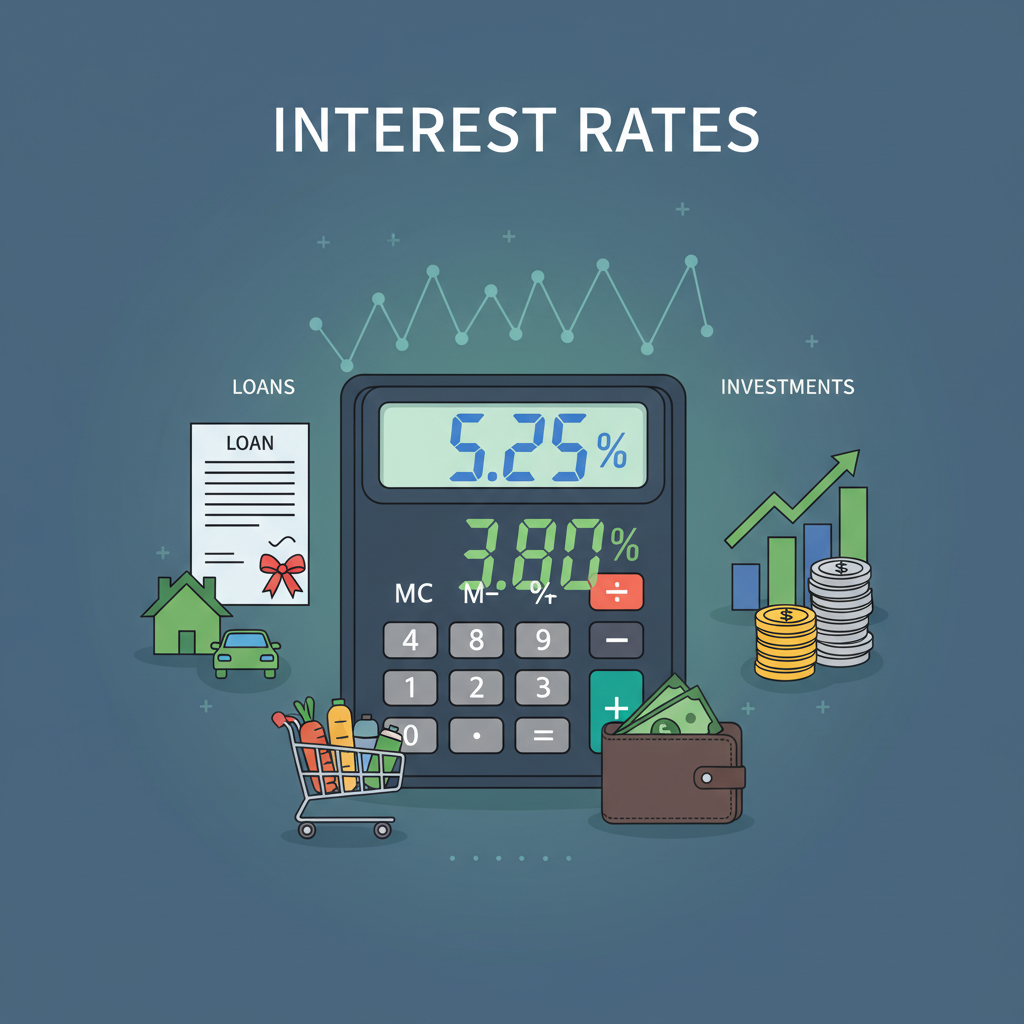
Relationship between interest rates and loans
The interest rates they determine the cost of borrowed money, affecting both consumers and businesses. When rates rise, loans become more expensive.
This increase in cost can reduce access to financing, limiting purchasing or investment capacity. On the contrary, low rates facilitate credit and stimulate economic activity.
Thus, rates are a crucial factor in the functioning of the financial market and in the debt decisions of different economic agents.
Cost of credit for consumers and companies
The cost of credit depends directly on current interest rates. For consumers, it implies higher fees and greater interest spending when rates are high.
In companies, high rates raise the cost of financing projects or operations, affecting profitability and decision-making about expansion and contracting.
Therefore, the level of rates influences general spending, since expensive credit usually slows down business consumption and investment.
Impact on access and use of financing
High rates limit access to financing, especially for sectors with lower payment capacity or lower financial support. This reduces opportunities for significant investments and purchases.
On the other hand, low rates facilitate the use of credit, promoting more people and companies to access loans for consumption and investment, boosting the economy.
Access to financing is conditioned by these rates, which modulate the balance between savings and debt.
Effects of rates on investments
The interest rates they directly affect investment decisions, since they modify the profitability required by investors and the cost of capital. When rates rise, the threshold for accepting projects rises.
This can lead to certain investments being considered unviable, affecting business and economic growth. On the contrary, low rates encourage more projects by reducing the financial cost.
In short, rates guide the destination of resources towards investments with different levels of risk and return.
Demanded profitability and investment decisions
The required profitability for investors, it increases when interest rates rise, since the alternative cost of money is higher. This forces projects to have high returns to be attractive.
Consequently, companies and investors tend to postpone or cancel investments with low returns. This slows down innovation and business expansion in high rate stages.
On the other hand, when rates are low, investment in projects that were previously unprofitable is stimulated, boosting economic activity.
Influence on the value of shares and business projects
Rates affect the value of shares as they determine the cost of money to finance projects and the discount rate to value future flows. High rates often reduce the stock market value of companies.
This is because they increase risk and financial cost, limiting the potential for growth and expansion. A drop in stock prices is often seen when rates rise.
Instead, with low rates, access to cheap financing can increase asset values and stimulate new business investment.
Incentives for savings and consumption
High rates provide higher returns for savings instruments, encouraging people to save money instead of consuming. This reduces aggregate spending in the short term.
On the contrary, when rates are low, savings become less attractive, encouraging greater consumption and allocating resources to immediate investments or expenses.
Thus, variations in rates shape individual decisions about how much to save and how much to spend.
Influence of rates on the daily economy
The interest rates they profoundly affect everyday decisions, especially in important expenses such as buying a home or car.
By raising rates, the cost to finance these purchases increases, which can lead to postponing or canceling these purchases, impacting the market.
On the other hand, low rates make credit more accessible, stimulating consumption and dynamism in key sectors in the domestic economy.
Expense decisions such as home and car purchases
The level of interest rates directly affects the amount of monthly payments that consumers must pay for mortgage loans or vehicle loans.
When rates are high, payments become more onerous, reducing purchasing power and can cool demand in these markets.
In contrast, low rates facilitate access to credit, encouraging families to acquire durable goods and thus boost the local economy.
Relationship with employment and economic stability
Fluctuations in interest rates influence job creation, since they make financing for companies more expensive or cheaper.
A high rate can slow business investment and slow hiring, increasing unemployment and affecting economic stability.
On the other hand, low rates encourage business expansion and job creation, contributing to a more stable economic environment.
Roles of interest rates in economic policy
The interest rates they are fundamental tools that central banks use to influence the economy. They modulate inflation and economic growth through precise adjustments.
These rates act on aggregate demand, affecting consumption and investment, which has an impact on the general pace of economic activity and the financial stability of the country.
Inflation control through rates
To control the inflation, central banks often raise interest rates, making credit more expensive and reducing excessive consumption that can drive up prices.
By raising rates, spending slows, limiting inflationary pressures. This mechanism is key to maintaining purchasing power and avoiding macroeconomic imbalances.
On the other hand, low rates could accelerate inflation by facilitating access to money and increasing demand for goods and services.
Stabilization and stimulation of economic growth
When the economy shows signs of slowing, rates can be reduced to stimulate credit, promote investment and consumption, thereby driving growth.
This monetary stimulus seeks to reactivate productive sectors and job creation, avoiding falling into prolonged recessions and maintaining economic dynamism.
However, this use requires balance so as not to cause overheating that generates future inflationary imbalances.