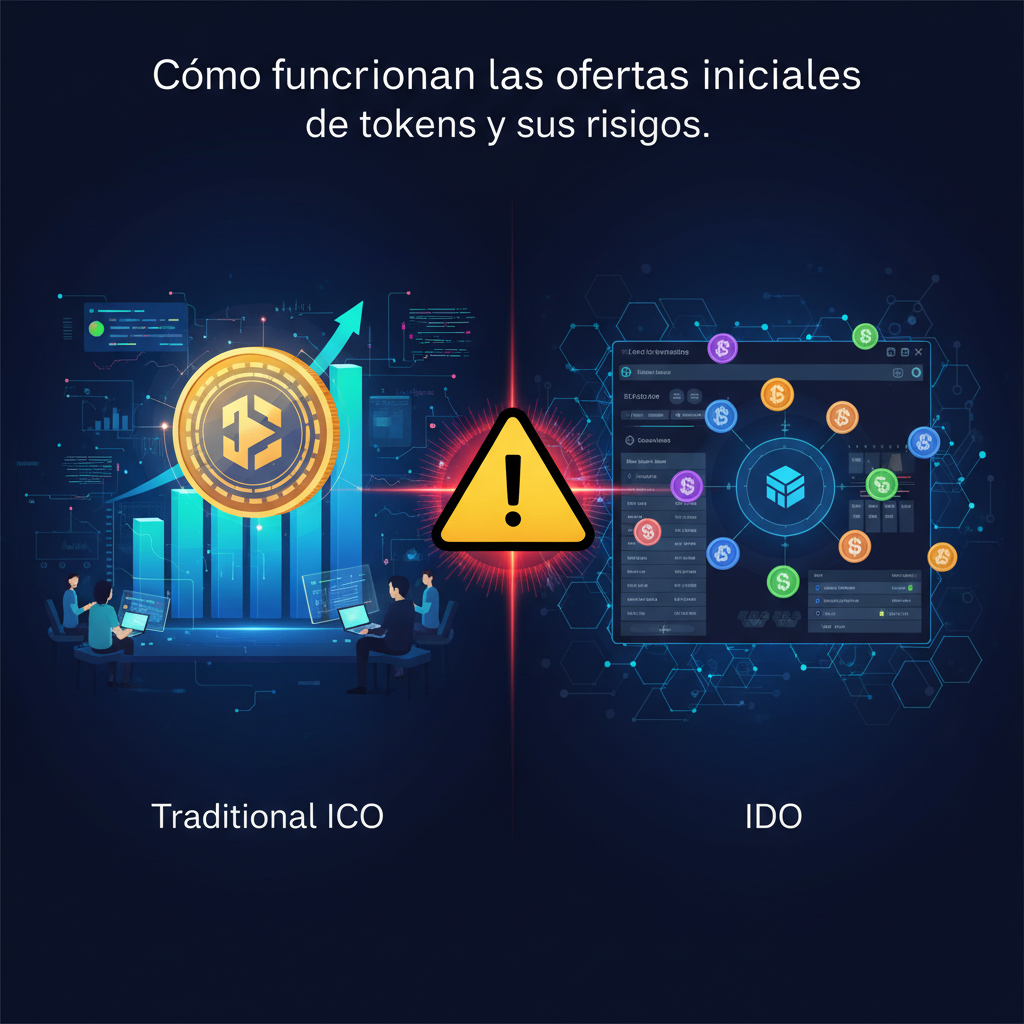
Definition and characteristics of ICO and IDO
The Initial Token Offers they are mechanisms used to finance crypto projects through the sale of digital tokens to investors.
The two main modalities are the ICO (Initial Coin Offering) and the GONE (Initial DEX Offering), each one with its own characteristics and processes.
Both seek to raise funds for startups or companies, but differ in how tokens are launched and traded in the market.
Concept and operation of ICOs
The ICO they are a method in which a company defines a plan and issues tokens at a set price to raise capital.
Investors acquire these tokens with the expectation that they will increase in value or that the project will be successful, without obtaining share rights.
This process is generally done using cryptocurrencies such as Bitcoin or Ethereum, and access to these tokens is usually initial and limited.
Features and advantages of IDOs
The GONE they are developed on decentralized exchanges (DEX), allowing immediate liquidity after the offer.
This makes it easier for tokens to trade instantly, unlike ICOs, where liquidity is usually more limited in the beginning.
In addition, IDOs present more open and dynamic access for investors, improving transparency and speed to market.
Token issuance mechanisms and processes
The issuance of tokens in one ICO it requires detailed planning to define the quantity, price and conditions of sale.
In contrast, the GONE they take advantage of decentralized platforms, offering liquidity and immediate trading after the offer.
These mechanisms reflect key differences in the way tokens reach the market and are available to investors.
Planning and issuance of tokens in ICO
In one ICO, The project team prepares an issuance plan that includes the number of tokens and their initial price.
The sale is usually carried out for a certain period, where investors acquire tokens with cryptocurrencies such as Ethereum.
Planning involves defining a fair and transparent scheme to attract capital without losing control of the project.
Liquidity and negotiation in IDO through DEX
The GONE they are carried out on decentralized exchanges (DEX), which allow one immediate liquidity.
Tokens can be traded from the moment of offering, making it easier for investors to access and market.
This improves the experience and reduces the lockout time that usually occurs in traditional ICOs.
Key differences between ICO and IDO
A main difference is the liquidity: IDOs allow immediate negotiation, while ICOs tend to have a longer delay.
Additionally, ICOs require more detailed planning and may have limited initial access, reducing speed to market.
On the other hand, IDOs offer greater transparency and ease for investors thanks to the use of DEX, changing market dynamics.
Risks associated with initial token offerings
Initial token offerings, such as ICOs and IDOs, present significant risks that investors should consider before participating.
These risks include fraud, scams, high volatility and lack of effective regulation in many markets.
Understanding these factors is key to making informed decisions and protecting invested capital.
Frauds and scams in ICO
ICOs are vulnerable to fraud due to a lack of regulation and anonymity, allowing fraudulent projects to raise funds.
Many scammers take advantage of investor confidence to launch fake projects, resulting in total capital loss.
This situation requires in-depth investigation of the team and transparency of the project before investing.
Volatility and lack of regulation
Tokens issued in ICOs and IDOs experience high volatility, creating significant risks for investors in the short term.
Furthermore, the absence of regulation in many countries leaves participants without legal guarantees against fraud or failure.
This combination of factors makes the investment highly speculative and subject to unpredictable market changes.
Recommendations for investors in ICO and IDO
Research and evaluation of the project
Before investing in one ICO or GONE, It is crucial to thoroughly research the team behind the project and their market experience.
Reviewing the white paper and proposed technology helps evaluate the feasibility and transparency of the plan presented to investors.
It is also important to consider the community supporting the project and clarity in communicating its objectives.
Considerations on the speculative nature and changes in the market
Investments in ICO e GONE they involve a high degree of speculation due to the inherent volatility of cryptocurrencies.
Prices can fluctuate rapidly due to external factors such as regulations, news or changes in market perception.
Therefore, investors are advised to be prepared for potential losses and avoid committing more capital than they can afford to lose.